
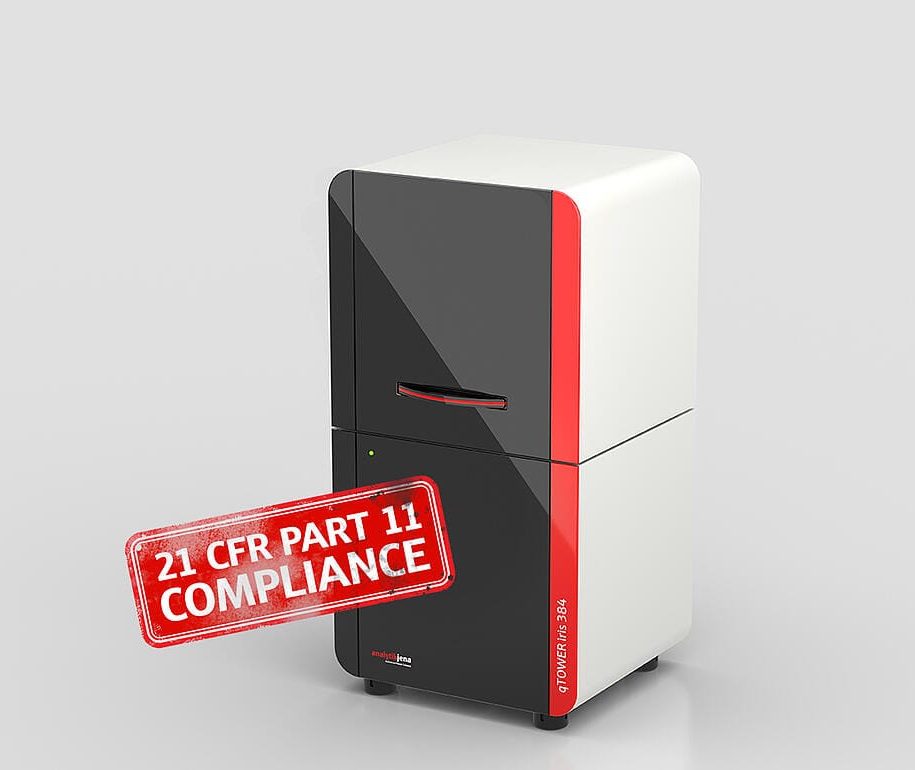
qTOWERiris Series – Flexible Real-Time PCR (qPCR) Thermal Cyclers by Analytik Jena
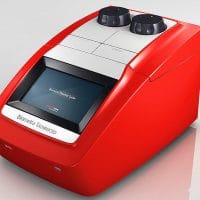
The qTOWERiris series from Analytik Jena is a family of high-performance real-time PCR thermal cyclers designed for quantitative PCR (qPCR) applications requiring precise temperature control, sensitive fluorescence detection and flexible multiplex analysis. With support for up to six targets simultaneously, freely configurable color modules and optical coverage extending from UV-A to near infrared (NIR), qTOWERiris provides an open platform for a wide range of molecular biology workflows.
The series is available in 96-well, touchscreen-operated 96-well and high-throughput 384-well configurations. Its open-system concept allows laboratories to select compatible dyes, consumables, reagents and assays according to their own applications rather than being restricted to a closed reagent ecosystem.
What is the qTOWERiris Series?
qTOWERiris is Analytik Jena’s real-time PCR platform for amplification and fluorescence-based detection of nucleic acids. It combines precise thermal cycling with a highly sensitive optical detection system to support quantitative PCR, melting curve analysis and multiplex assays.
The platform is designed as an open qPCR system. Researchers can choose the consumables, assays, reagents and fluorescent dyes that best fit their workflows, while configurable color modules allow the optical system to be adapted to different fluorescence channels.
Three principal configurations are available:
- qTOWERiris – PC-controlled 96-well real-time PCR system.
- qTOWERiris touch – standalone 96-well system with an integrated 10-inch touchscreen.
- qTOWERiris 384 – 384-well real-time PCR system designed for high-throughput applications.
UV-ready versions are also available for applications requiring fluorescence detection within the UV-A wavelength range.
Key Features of the qTOWERiris Real-Time PCR System
- Multiplex detection of up to six targets simultaneously.
- Optical coverage from UV-A to near infrared (NIR).
- Flexible, individually configurable fluorescence color modules.
- Compatibility with commonly available qPCR dyes, assays, reagents and consumables.
- Temperature uniformity of ±0.15 °C across the sample block.
- High-sensitivity PMT fluorescence detection.
- Fiber-optic scanning for individual well excitation and detection.
- 96-well and 384-well configurations.
- Linear temperature gradient functionality for assay optimization.
- Automatic self-test before each run.
- Free access to raw fluorescence data.
- Software-adjustable gain for optimization of weak fluorescence signals.
- Quiet operation suitable for routine laboratory environments.
Precise and Uniform Temperature Control
Temperature accuracy and uniformity are essential for reproducible real-time PCR results. Small temperature differences between wells can influence amplification efficiency, melting behavior and Ct values.
The 96-well qTOWERiris systems use a silver sample block with gold coating. Silver offers very high thermal conductivity, helping distribute heat rapidly and uniformly across the block.
The qTOWERiris series achieves temperature uniformity of ±0.15 °C at 55 °C after 15 seconds and temperature control accuracy of ±0.1 °C.
Fast Heating and Cooling
For the 96-well qTOWERiris and qTOWERiris touch systems, thermal performance includes:
- Maximum heating rate: 8.0 °C/s.
- Average heating rate: 7.0 °C/s.
- Maximum cooling rate: 5.5 °C/s.
- Average cooling rate: 4.5 °C/s.
Precise thermal control allows the target temperature to be reached rapidly while minimizing temperature overshoot and undershoot. This helps maintain consistent amplification conditions and reduces the risk of unwanted amplification artifacts.
Linear Gradient Tool
The integrated gradient function is useful during assay development and PCR optimization. Different annealing temperatures can be tested within a single run to identify suitable reaction conditions.
For the 96-well configuration, the adjustable gradient range extends across 12 columns, while the 384-well configuration provides gradient control across 24 columns.
Advanced Optical Detection from UV-A to Near Infrared
qTOWERiris combines a high-power LED excitation source, fiber-optic scanning and sensitive photomultiplier tube detection to provide reliable fluorescence measurements across the PCR plate.
Instead of relying on a conventional camera-based imaging system, the fiber-optic shuttle moves across the plate and measures wells individually. Each well is excited and detected from the same optical geometry, helping achieve consistent fluorescence acquisition throughout the sample block.
Multiplex qPCR with Up to Six Targets
The instrument can analyze up to six fluorescence targets simultaneously, enabling complex multiplex qPCR assays within a single reaction.
The qTOWERiris platform supports spectral detection from conventional visible fluorescence channels through near infrared. UV-ready configurations additionally extend the excitation range into UV-A.
Typical fluorescence channels include dyes within spectral regions used for:
- FAM-type dyes.
- JOE-type dyes.
- ATTO550-type dyes.
- ROX-type dyes.
- Cy5-type dyes.
- Cy5.5-type near-infrared dyes.
- UV-A fluorescent dyes such as ATTO390 with the appropriate UV module.
The flexible optical architecture enables laboratories to configure detection channels according to existing or future assay requirements.
An Open qPCR System with Freedom of Choice
One of the defining characteristics of qTOWERiris is its open-system architecture.
Laboratories are free to select:
- qPCR reagents and master mixes.
- Fluorescent dyes and probes.
- PCR assays.
- Compatible PCR plates, tubes and strips.
- Color modules according to required detection wavelengths.
The instrument is factory calibrated, and changing to another compatible fluorescence dye does not normally require instrument recalibration. Additional color modules can be selected and installed according to evolving laboratory requirements.
Software gain settings can also be used to selectively enhance weaker fluorescence signals, providing additional flexibility during assay development and optimization.
Reliable Well-to-Well Fluorescence Detection
The fiber-optic scanning system measures wells sequentially using consistent excitation and detection geometry. This design helps minimize positional differences across the PCR plate and supports homogeneous amplification curves.
According to performance data published by Analytik Jena, testing across a 96-well block using an E. coli-specific target produced a mean Ct value of 14.04 with a standard deviation of 0.04, demonstrating strong well-to-well uniformity under the reported test conditions.
The manufacturer also demonstrates discrimination between template concentrations separated by 1.3-fold dilution steps, illustrating the optical and thermal precision available for quantitative measurements.
qTOWERiris Models
| Model | Format | Control | Recommended Use |
|---|---|---|---|
| qTOWERiris | 96 wells | PC | Routine and advanced real-time PCR laboratories |
| qTOWERiris touch | 96 wells | Integrated 10-inch touchscreen / standalone operation | Laboratories requiring convenient standalone qPCR operation |
| qTOWERiris 384 | 384 wells | PC | High-throughput qPCR and screening applications |
qTOWERiris – 96-Well PC-Controlled System
The standard qTOWERiris uses a 96-well gold-coated silver sample block and is operated from a PC. It is suitable for research laboratories requiring flexible qPCR analysis with configurable fluorescence channels.
qTOWERiris Touch – Standalone qPCR
qTOWERiris touch combines the 96-well thermal and optical platform with an integrated 10-inch touchscreen. The system can therefore be operated as a standalone instrument without requiring a dedicated PC for routine setup and protocol execution.
qTOWERiris 384 – High-Throughput Real-Time PCR
qTOWERiris 384 provides a 384-well format for laboratories processing larger numbers of reactions. The system uses an aluminum alloy sample block and supports reaction volumes from 2 to 30 µL.
A complete 384-well plate can be optically read in approximately 6 seconds, independent of the number of fluorescence dyes being analyzed.
Applications of the qTOWERiris Real-Time PCR Platform
The combination of flexible fluorescence detection, precise thermal control and open reagent compatibility makes qTOWERiris suitable for a broad range of molecular biology applications.
Gene Expression Analysis
Real-time PCR can be used to quantify gene expression by measuring nucleic acid amplification during each PCR cycle. qTOWERiris supports fluorescence-based assays used in quantitative gene expression workflows.
Pathogen Detection
Multiplex capability allows several genetic targets to be detected within a single reaction, making the platform suitable for development and research involving microorganisms and pathogen-associated nucleic acid targets.
Genotyping and Mutation Analysis
Fluorescence-based PCR assays can be applied to distinguish genetic variants, alleles or sequence-specific targets.
Multiplex qPCR
Up to six fluorescence channels can be measured simultaneously, enabling multiple target genes, controls or reference sequences to be incorporated into a single reaction.
DNA Amplicon Library Preparation
The instrument can support PCR amplification workflows used during preparation of DNA amplicon libraries for next-generation sequencing applications.
Melting Curve Analysis
Precise thermal control and fluorescence monitoring support melting curve analysis for evaluation of PCR products and fluorescence-based thermal characterization workflows.
Thermal Shift Assays
UV-ready qTOWERiris configurations can expand the available fluorescence range for specialized applications, including fluorescence-based thermal shift assays using suitable dyes.
Research Fields
Typical application areas include:
- Molecular biology and genetics.
- Biomedical and life science research.
- Microbiology.
- Pharmaceutical research.
- Food and agricultural research.
- Environmental molecular analysis.
- Biotechnology.
Technical Specifications
| Parameter | qTOWERiris / qTOWERiris Touch | qTOWERiris 384 |
|---|---|---|
| Sample format | 96 wells | 384 wells |
| Sample block | Gold-coated silver block | Aluminum alloy block |
| Sample volume | 5–100 µL | 2–30 µL |
| Maximum heating rate | 8.0 °C/s | 4.0 °C/s |
| Average heating rate | 7.0 °C/s | 3.0 °C/s |
| Maximum cooling rate | 5.5 °C/s | 2.0 °C/s |
| Average cooling rate | 4.5 °C/s | 1.5 °C/s |
| Temperature range | 4–99 °C | 4–99 °C |
| Temperature uniformity | ±0.15 °C at 55 °C after 15 s | ±0.15 °C at 55 °C after 15 s |
| Temperature control accuracy | ±0.1 °C | ±0.1 °C |
| Gradient | 0.1–40 °C across 12 columns | 0.1–24 °C across 24 columns |
| Light source | Long-life 7-chip power LED | Long-life 7-chip power LED |
| Detector | Highly sensitive PMT | Highly sensitive PMT |
| Multiplex capacity | Up to 6 targets | Up to 6 targets |
| Filter positions | 6 positions | 6 positions |
| Dynamic range | 10 orders of magnitude | 10 orders of magnitude |
| Connectivity | USB, Ethernet | USB, Ethernet |
Technical specifications may vary depending on model, UV configuration and instrument version. Please contact 2H Instrument for confirmation of the recommended configuration for your application.
qPCR Software and Data Management
The qTOWERiris series is supported by Analytik Jena software designed for real-time PCR setup, monitoring and analysis.
Key software functions include:
- Intuitive, modular workflow design.
- Standard qPCR analysis methods.
- Amplification curve analysis.
- Melting curve evaluation.
- Access to raw fluorescence measurement data.
- Generation of structured PDF reports.
- Advanced user management.
- Software-adjustable fluorescence gain.
An optional FDA 21 CFR Part 11 module is available for laboratories requiring additional functionality related to regulated electronic records and user management.
PC-controlled configurations can also support operation of multiple qTOWERiris instruments from a single computer, helping laboratories expand qPCR capacity while maintaining a centralized workflow.
Why Choose qTOWERiris?
| Laboratory Requirement | qTOWERiris Solution |
|---|---|
| High qPCR reproducibility | Temperature uniformity of ±0.15 °C and consistent fiber-optic well scanning. |
| Multiplex analysis | Simultaneous detection of up to six fluorescence targets. |
| Freedom to select assays | Open platform compatible with commonly available dyes, reagents and assays. |
| Future assay flexibility | Individually configurable and upgradeable color modules. |
| Wide fluorescence range | Detection spectrum extending from UV-A to near infrared depending on configuration. |
| High-throughput workflows | Dedicated qTOWERiris 384 configuration. |
| Standalone operation | qTOWERiris touch with integrated 10-inch touchscreen. |
| Assay optimization | Linear temperature gradient and adjustable fluorescence gain. |
| Data transparency | Access to raw fluorescence data and processed curves. |
Which qTOWERiris Model Should You Choose?
The ideal qTOWERiris configuration depends primarily on laboratory throughput, workflow preferences and fluorescence requirements.
- Choose qTOWERiris for flexible, PC-controlled 96-well qPCR workflows.
- Choose qTOWERiris touch when standalone operation and touchscreen control are preferred.
- Choose qTOWERiris 384 for laboratories requiring higher sample throughput and assay miniaturization.
- Choose a UV-ready configuration when applications require fluorescence excitation within the UV-A spectrum.
The required color modules should be selected according to the fluorescent dyes used in the intended assays.
Frequently Asked Questions About qTOWERiris
What is the qTOWERiris?
qTOWERiris is a real-time PCR thermal cycler from Analytik Jena designed for quantitative PCR and fluorescence-based nucleic acid analysis. The series includes 96-well, touchscreen 96-well and 384-well systems.
How many targets can qTOWERiris detect simultaneously?
qTOWERiris supports multiplex detection of up to six targets simultaneously using configurable fluorescence color modules.
Can qTOWERiris work with different qPCR dyes?
Yes. qTOWERiris is designed as an open system and supports commonly available fluorescent dyes. Color modules can be selected according to the excitation and emission wavelengths required by the assay.
Does qTOWERiris require recalibration when changing dyes?
The instrument is factory calibrated, and introducing compatible new dyes does not normally require recalibration. The optical configuration can be expanded with additional color modules according to application requirements.
What is the difference between qTOWERiris and qTOWERiris touch?
Both systems use a 96-well format. qTOWERiris is operated via PC, while qTOWERiris touch integrates a 10-inch touchscreen for standalone operation.
What is qTOWERiris 384 designed for?
qTOWERiris 384 is designed for high-throughput real-time PCR applications using 384-well microplates and small reaction volumes.
Does qTOWERiris support UV fluorescence?
UV-ready configurations are available. With the appropriate optical module, the excitation spectrum can be extended into the UV-A region.
Is qTOWERiris suitable for multiplex qPCR?
Yes. Up to six fluorescence channels can be measured simultaneously, making qTOWERiris suitable for multi-target real-time PCR assays.
Request a qTOWERiris Configuration for Your qPCR Application
Selecting the appropriate real-time PCR system requires consideration of sample throughput, plate format, fluorescent dyes, multiplex requirements, reaction volumes and data management needs.
Contact 2H Instrument for consultation on the qTOWERiris, qTOWERiris touch and qTOWERiris 384 real-time PCR systems from Analytik Jena. Our team can help you select the appropriate instrument and optical configuration for your molecular biology and qPCR workflow.



Reviews
There are no reviews yet.